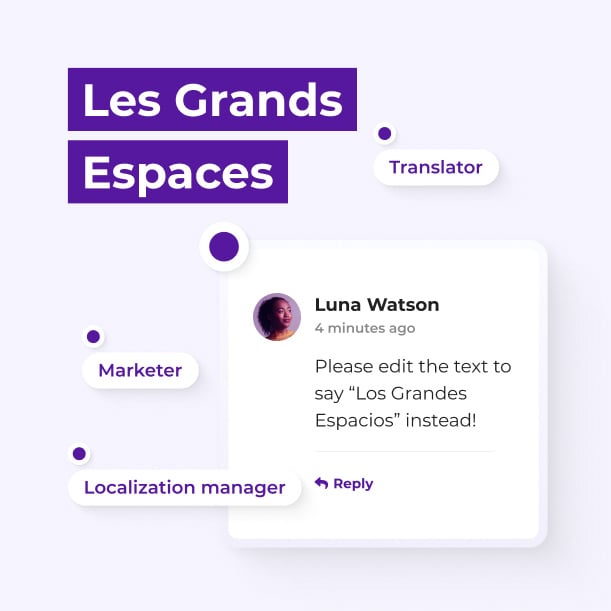
For many enterprises, translation does not become challenging because the content itself is difficult. Problems arise because translation responsibilities and workflows are spread across too many systems, teams, and deadlines. This is exactly the kind of complexity Smartling is built to manage as an enterprise translation management system and enterprise localization platform.

Stakeholders across your organization are looking for different things in a translation platform:

  • Marketing needs campaigns localized quickly.
  • Product teams need UI strings translated on release timelines.
  • Support teams need help center content kept current.

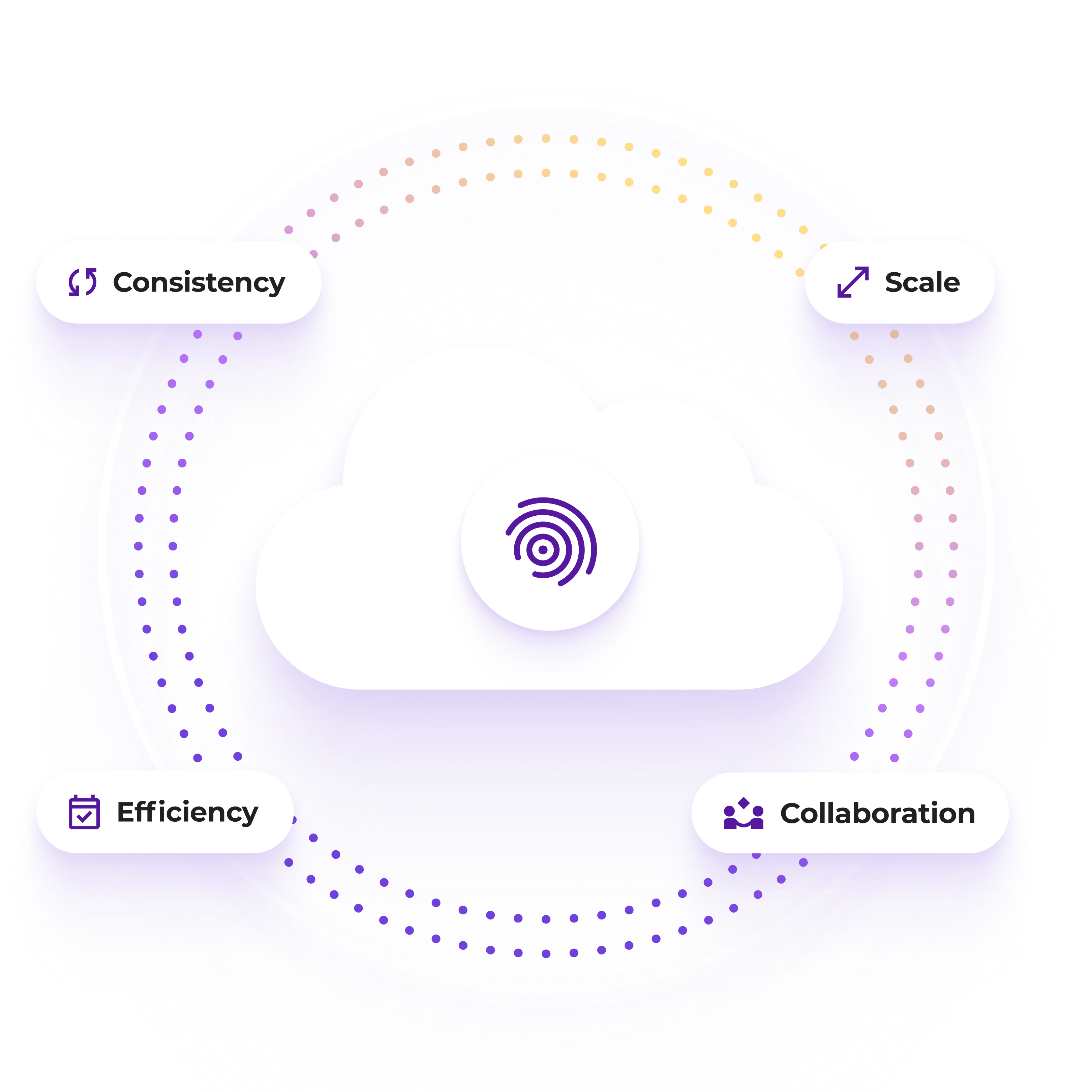
At enterprise scale, a Sistema de gestión de traducciones (TMS) stops being optional. It becomes the system that keeps multilingual content moving with stronger governance, clearer visibility, and more control across the business.

Smartling brings workflows, quality controls, integrations, and analytics into one place so that contenido multilingüe can move with more structure and less operational friction.

¿Qué es un sistema de gestión de traducciones?

A translation management system is a centralized hub for managing localization workflows and translated content.

In an enterprise context, it helps teams manage workflows, quality, automation, and scale across languages and systems as part of a broader localization platform.

Why enterprises need a TMS

Manual translation workflows can function well for small, occasional projects. They start to break down when translation becomes a continuous business process with more content, more channels, more languages, and more stakeholders involved.

Translation volume overload usually happens faster than teams expect.

A few spreadsheet trackers turn into a web of file handoffs, approval threads, terminology questions, and last-minute edits spread across email, chat, and disconnected tools.

At that point, the problem is not just inefficiency. It is a loss of visibility and control.

As enterprises publish more content across websites, apps, help centers, and product experiences, governance, visibility, and automation become harder to manage through spreadsheets and email alone.

A TMS exists to solve this challenge by turning localization into a managed program instead of a series of one-off requests.

What an enterprise TMS actually helps you manage

Workflows that keep content moving

Within an enterprise translation management system like Smartling, workflow management covers intake, routing, approvals, and automation that keep content moving without constant manual coordination.

Streamlining translation management matters because enterprise translation is never one workflow.

A product release may need a faster path than a legal page or marketing copy may need different reviewers than support content.

The value of a TMS is not that it stores work. It is that it keeps work moving through the right process.

Quality that is built into the process

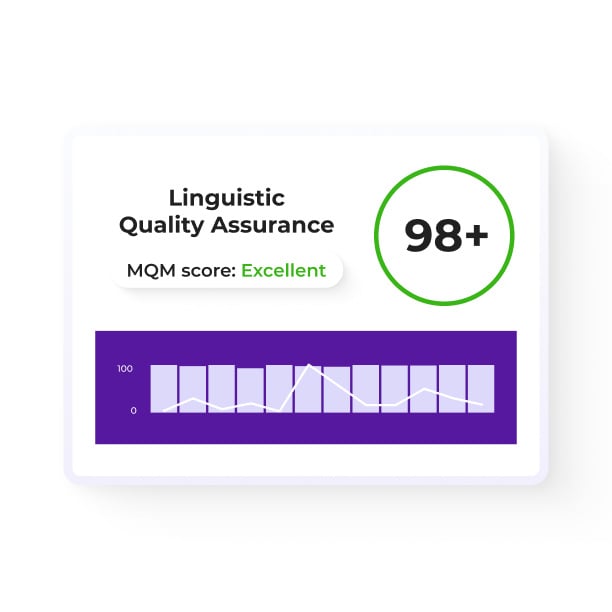
Within an enterprise translation management system like Smartling, translation quality control includes QA, reviews, and scoring that make quality measurable instead of reactive. Smartling’s analytics and quality tooling include Linguistic Quality Assurance (LQA), configurable review points, and Quality Confidence Score.

Enterprise teams need that structure because quality cannot depend on someone catching issues at the very end. Translated content has to be reviewed, measured, and improved across projects, and languages over time.

Consistency across languages and teams

Within an enterprise translation management system like Smartling, translation memory and terminology management support consistency, reuse, and brand control across content types and markets.

Smartling supports memoria de traducción — stored, translated text that can be reused when the same or similar content appears again, reducing redundant work, improving consistency, and lowering costs.

The value of translation memory goes beyond efficiency. Smartling’s glossary and style guide resources are designed to help teams keep approved terminology, tone, and brand guidelines aligned across translators, reviewers, business units, and languages.

Integrations that connect localization to the business

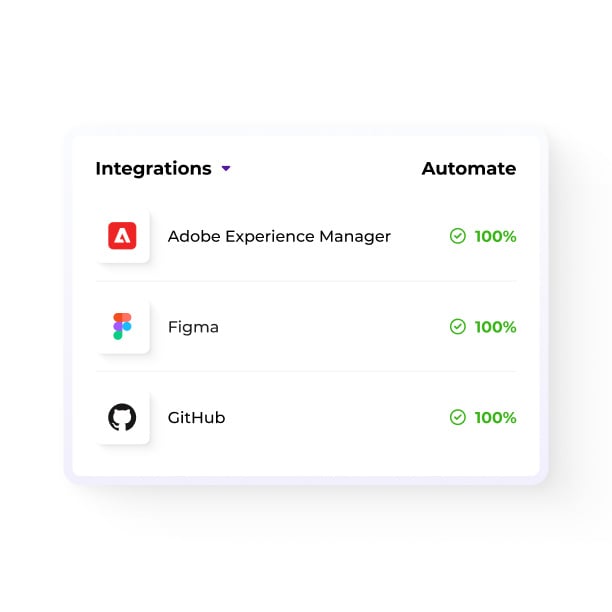
Within an enterprise translation management system like Smartling, automation and integrations connect localization to CMS platforms, code repositories, marketing tools, and product workflows.

Smartling highlights pre-built connectors, APIs, SDKs, support for continuous development workflows, and repository integrations that let localization move in parallel with development and content operations.

Seamless integration is one of the clearest differences between a platform and a point solution (a standalone tool built to solve only one part of the process). Enterprises can’t afford to let localization sit off to the side. They need it to be connected to the systems where content is created, updated, and shipped.

Reporting that makes localization manageable

Within an enterprise translation management system like Smartling, reporting and analytics help teams understand translation cost, workflow speed, bottlenecks, savings, and quality performance.

Smartling’s analytics pages specifically call out workflow reporting, cost estimates, translation savings reports, and quality measurement.

That visibility matters because localization is easier to improve when teams can see what is slowing work down, what translation memory is saving, and how quality is trending over time.

Translation management system vs. manual workflows and point solutions

Manual workflows and point solutions can solve one translation problem at a time. Enterprises usually need a system that connects the whole process, from intake and routing to quality, reuse, reporting, and governance.

Aspecto

Manual / point tools

Enterprise TMS

Escalabilidad

Bajo

Alto

Visibilidad

Fragmentada

Centralized

Control de calidad

Inconsistente

Incorporado

Automatización

Minimal

Extensive

Governance

Débil

Fuerte

The difference between a connected translation system and disconnected tools is the difference between managing translation as a series of tasks and managing it as an enterprise program.

Once translation affects multiple teams, systems, and markets, disconnected tools create too many gaps in workflow, quality, and oversight.

How AI fits into a translation management system

AI is changing translation, but it does not replace the need for a TMS.

If anything, it makes the TMS more important because AI still needs workflow controls, quality safeguards, approved terminology, and governance.

In practice, AI can improve a TMS in four big ways: AI-assisted translation, workflow automation, quality estimation, and cost optimization. Smartling’s AI Hub and analytics stack support that model by combining model choice and prompt controls with quality measurement, savings visibility, and centralized workflow governance.

Centro de inteligencia artificial de Smartling gives teams access to 20+ LLMs and machine translation engines in one place, along with features like custom prompts, auto fallback, and hallucination mitigation.

Smartling also ties AI quality and brand alignment back to controlled language assets such as translation memory, glossaries, and style guidance.

AI can make translation faster and more flexible, but Smartling’s enterprise-grade TMS is still the layer that governs how AI is used, where human review belongs, and how output is measured against quality expectations.

How to choose the right translation management system

When enterprises evaluate a TMS, they are not just buying software. They are choosing the system that will shape how multilingual content moves through the business.

  • Escalabilidad

Look for a platform that can grow with your content volume, languages, and teams. Smartling positions its platform around enterprise-scale translation operations and broad language support.

  • Workflow flexibility

Different content types need different review paths, approval structures, and timing expectations. The right TMS should support workflows that match how your organization actually works.

  • Quality controls

Do not settle for a system that treats quality as manual cleanup. Look for built-in evaluation tools, review configuration, terminology support, and measurable quality reporting.

  • AI and automation capabilities

If AI translation is part of your strategy, evaluate how the platform governs it. Smartling’s AI Hub emphasizes centralized model access, custom prompts, hallucination mitigation, and secure deployment inside translation workflows.

  • Integraciones

Translation should connect to the systems your teams already use. Smartling highlights integrations, custom APIs, SDKs, and support for continuous development workflows as part of its platform maturity.

  • Reporting, governance, and compliance

Enterprises need visibility and trust. Smartling’s reporting tools cover costs, savings, bottlenecks, and quality, while its security materials cite PCI, SOC 2, HIPAA, GDPR, HITRUST e1, and multiple ISO certifications.

What happens without the right TMS?

Without the right translation management system, enterprises run into familiar problems: workflow bottlenecks, rising costs, inconsistent quality, and weaker governance across systems and teams.

Your team will still accomplish translation tasks, but measuring, improving, and scaling will be difficult.

In regulated or security-sensitive environments, disconnected processes can also make compliance harder to manage.

And when AI is layered on top without centralized controls, poor AI governance can produce faster output without better oversight.

Why a TMS is foundational for enterprise localization

A translation management system is not just a tool for translating text.

For enterprises, it is the foundation for running multilingual content operations with more automation, better quality control, stronger governance, and clearer visibility into performance.

Enterprises do not need more disconnected translation tools. They need a platform that brings workflows, language assets, integrations, analytics, and AI together in one system.

That is the role Smartling is built to play as an enterprise-grade translation management system and localization platform.

Preguntas frecuentes

What does a translation management system do?

A TMS centralizes the workflows, automation, collaboration, and translated content involved in localization. At the enterprise level, it also supports quality control, reporting, and governance across languages and teams. 

Who uses a translation management system?

TMS platforms are used by localization teams, marketing teams, product teams, developers, support organizations, and other stakeholders managing multilingual content across systems and markets. Smartling’s team and solution pages reflect that cross-functional use.  

Is a TMS only for large companies?

No, but the need becomes much clearer as content volume, languages, and collaborators grow. Manual workflows may work for a time, but scale is where a TMS becomes much more valuable.

How is a TMS different from machine translation tools?

Machine translation tools generate translations. A TMS manages the broader workflow around translation, including routing, approvals, terminology, quality evaluation, integrations, and reporting. AI can strengthen that system, but it does not replace it.

¿Por qué esperar para traducir de manera más inteligente?

Converse con alguien del equipo de Smartling para identificar cómo podemos ayudarle a aprovechar mejor su presupuesto al entregarle traducciones con la más alta calidad, mayor rapidez y a costos mucho más bajos.
Cta-Card-Side-Image